When the Corner Office Closes Doors: How Certain Promotions Quietly Erode Your Finance Market Value
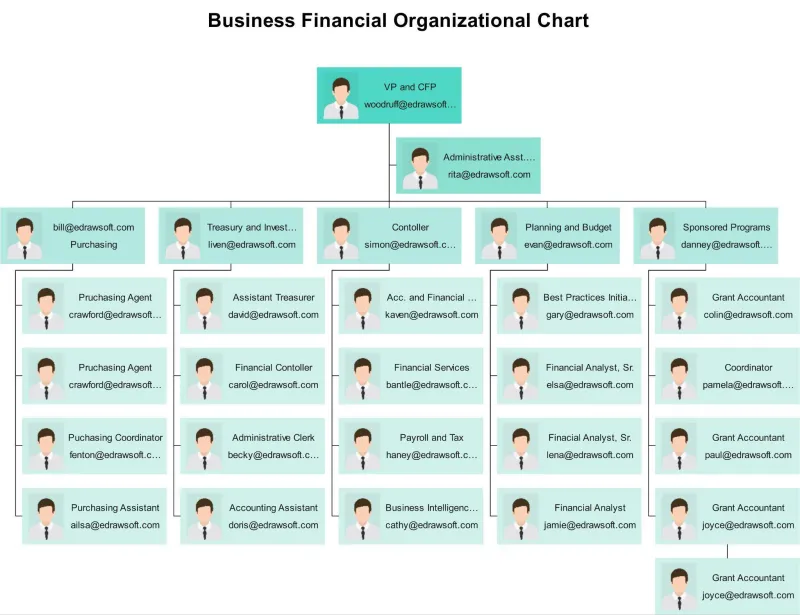
Photo: finance professional looking at corporate org chart in modern office, via images.wondershare.com
There is an assumption embedded in corporate finance culture that promotions are unambiguously good. A new title arrives with a salary bump, perhaps a larger team, and the social proof of upward movement. Colleagues offer congratulations. LinkedIn notifications pile up. And yet, for a meaningful number of finance professionals, that moment of apparent triumph quietly sets in motion a narrowing of their external options that takes years to fully recognize.
This is the promotion trap that rarely gets discussed in performance reviews or career development conversations. It does not announce itself. It accumulates.
The Architecture of a Gilded Cage
To understand how a promotion can reduce market value, it helps to think about what external employers actually purchase when they hire a senior finance professional. They are not buying a title. They are buying transferable capability—skills, relationships, and experience that can be applied across industries, organizations, and contexts.
The problem with certain promotions is structural. When a finance professional moves into a highly specialized internal role—say, Head of Intercompany Accounting for a conglomerate, or VP of Finance Systems Integration during an ERP migration—they accumulate deep expertise in a context that may not translate cleanly to another organization. The work is genuinely complex. The title sounds impressive. But the skill set being built is increasingly narrow and increasingly dependent on institutional knowledge that has limited portability.
Similarly, promotions that move professionals deeper into support functions—further from revenue, further from strategic decision-making—can create perception problems in the external market. A Director of Financial Reporting at a large corporation may be doing sophisticated, high-stakes work. But if a competing employer's CFO is scanning that resume, what they see is a function, not a strategist.
The Reporting Structure Problem
Where you sit on an org chart matters more to external recruiters than most finance professionals realize. A promotion that moves you up within a function but keeps you reporting to the same senior leader—or, worse, inserts a new layer between you and the C-suite—can signal to outside observers that your trajectory has plateaued.
Consider two finance professionals at comparable organizations. One is promoted to Senior Director of FP&A and reports directly to the CFO, participating in board presentations and strategic planning cycles. The other is promoted to Senior Director of Financial Operations and reports to a VP who reports to the CFO. On paper, the titles are similar. In practice, the first professional is building a portfolio of experience and visibility that opens doors. The second is building execution credentials that, while valuable, position them as a functional operator rather than a strategic leader.
External search firms and corporate hiring committees notice this distinction. It is often not discussed directly, but it shapes how candidates are slotted.
Industry-Specific Traps Worth Naming
Certain finance sectors have well-documented promotion traps that experienced practitioners recognize but rarely surface publicly.
In investment banking, moving into a coverage role for a declining or highly specialized sector—even at a senior level—can limit lateral mobility across the street. The title may be Managing Director, but if the deal flow in that vertical dries up, the external market for that specific expertise contracts alongside it.
In corporate finance, accepting a promotion into a captive treasury or accounting leadership role at a private company with no external reporting requirements can quietly remove you from the professional development ecosystems—regulatory exposure, public company governance, investor relations—that make finance leaders attractive to a broad set of future employers.
In asset management, taking on operational leadership roles in lieu of investment roles—even when the compensation is comparable—can reposition a professional from the investment track to the business management track in ways that are difficult to reverse.
A Framework for Evaluating the Real Value of a Promotion
Before accepting a promotion, finance professionals should run it through a set of questions that most career conversations never raise.
Does this role broaden or narrow your transferable skill set? If the primary value of the new role is institutional—dependent on knowing how this particular organization works—that is a signal worth examining.
How does this title read to an external audience unfamiliar with your company? Ask a trusted colleague at another firm to react to the title cold. Their interpretation approximates what a recruiter will assume.
Does this promotion increase or decrease your proximity to revenue and strategy? The closer a finance professional sits to decisions that drive organizational outcomes, the more attractive they tend to be to external employers.
What is the typical exit trajectory for people who hold this role? If your predecessors in this position stayed for a decade and then retired in place—or struggled to find comparable external opportunities—that pattern is informative.
Does the compensation premium justify the opportunity cost? A $25,000 salary increase tied to a role that limits your next move to a narrower set of employers may cost significantly more in lifetime earnings than the near-term gain suggests.
Negotiating the Promotion You Actually Want
Recognizing the trap is only half the work. Finance professionals who identify a promotion's structural limitations still have options—particularly if they are in a position of leverage.
It is entirely reasonable to negotiate the scope of a new role, not just the compensation. Requesting expanded cross-functional exposure, inclusion in strategic planning processes, or a defined pathway to broader responsibilities are legitimate asks that a strong employer should be willing to discuss. If the answer is consistently no, that response itself is useful information about the ceiling being offered.
Alternatively, a professional might accept a promotion with clear eyes—understanding its limitations—while simultaneously investing in the external visibility work that keeps market options open. Publishing thought leadership, maintaining active relationships with executive search professionals, and sustaining a visible presence in professional organizations all serve as counterweights to the narrowing effect of a specialized internal role.
The Longer View
Career capital in finance is built over decades. The decisions that feel small in the moment—which department to join, which promotion to accept, which reporting line to sit under—compound in ways that are difficult to reverse at the senior level.
The professionals who navigate this terrain most effectively are those who treat every promotion as a strategic decision, not just a reward. They ask not only what the new role pays, but what it builds, what it signals, and what doors it keeps open. That discipline—applied consistently across a career—is what separates finance professionals who remain in demand at 50 from those who discover, too late, that their most recent title was also their last real choice.